
Bayesian
That night.

A few days ago, I came across a piece from “The Spectator” that titled: “Italy is a land of beauty and death. Perhaps the two go hand in hand”. The author opened by telling an episode that occurred in Florence when she was just a child, and there was a bang and a huge splat blood. She went on with other rather random death-related stories set in Italy, to then land on the main topic: the sinking of Mike Lynch's yacht in Sicily on the 19th of August.
The author found it “impossible not to feel a sense of uneasy prophecy” in the strange death of Mike Lynch, his daughter Hannah and other five people from his party. The article was beautifully written, but I was so curious of finding a point in this statement that I felt unsurprisingly disappointed to find out there was none. I tried to imagine how this correlation worked and thought of a mythical setting. A waterspout surprised them in the middle of the night and Beauty all around made them enchanted and poisoned, and helpless.
But no, no way, Italy has nothing to do with that and the hypothesis that the crew of the vessel – flying British flag – might have ignored a series of safety rules is hard to debunk. Italy is not a country of death. But neither is a postcard nor a Dolce Vita Disneyland made of slow life and pleasure. It would be far more accurate to argue that Italy is still a country. And as in any other piece of the respectable planet we happened to live, nature rules and, of course, people die. And, by the way, very much less than in other more unfortunate countries (aren’t we the nation of old people?).
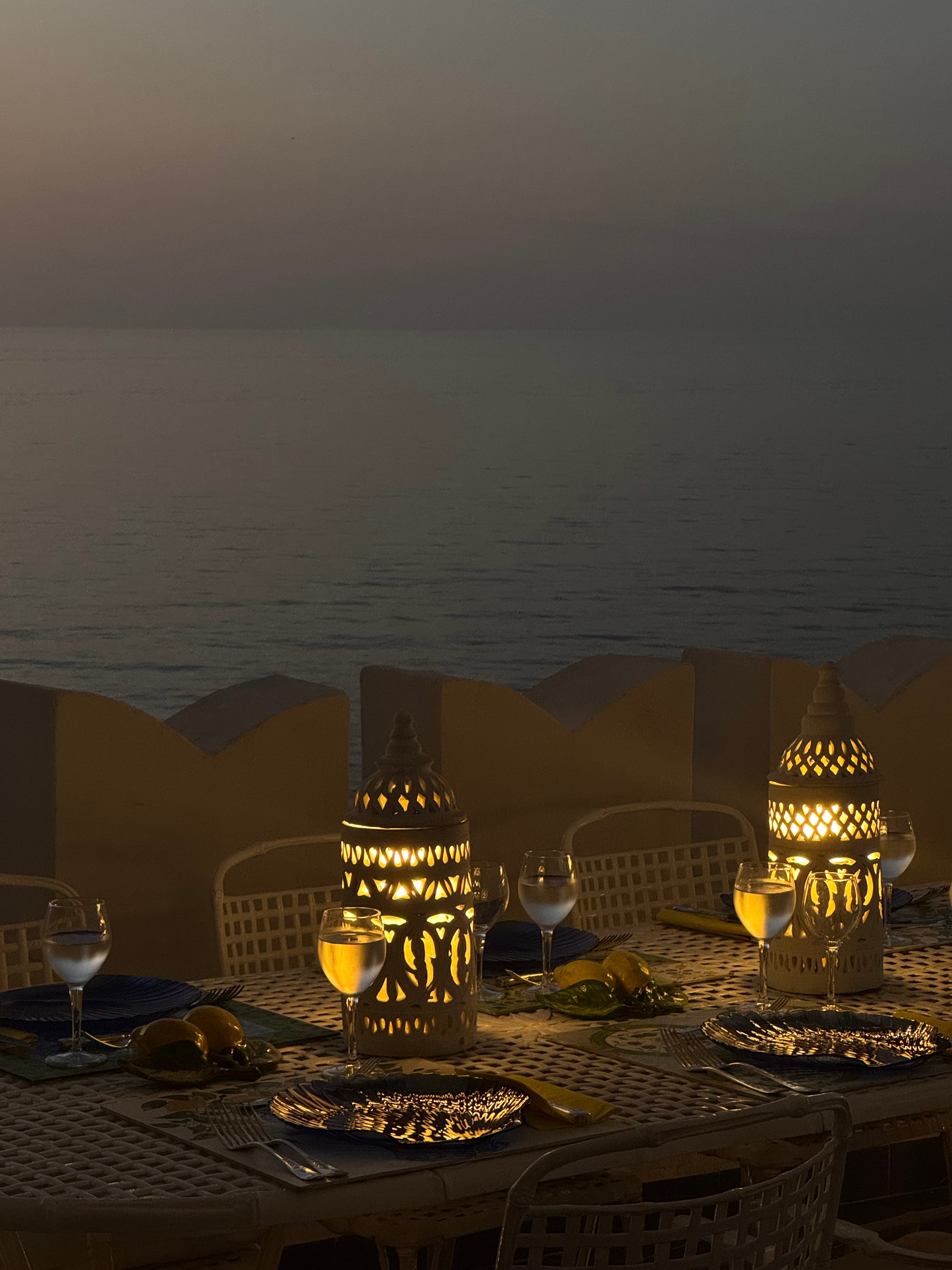
While writing, I see exactly where the Bayesian sank, that night, in less than a bunch of minutes. From this table in my house in Solanto, next to Porticello, my sight manages to distinguish different buoys. A red one, right in front of my eyes, marks the precise point where the wreck is.
That night I wasn’t home. I was in Kenya, just got to the coast after a long Safari that gave us nature simply the way it is meant to be. Even before reading the news, my mother called. The evening before, my family was reunited, having one of those end-of-summer-dinners on the terrace I live for. Everyone has its own way to dismiss the fine season and, in my life, it has always been like this. Loud and winey nights with these same people, that look like me, talk like me and, often, do not think like me. They saw the Bayesian pass by and anchor in front of them. They stood amazed, by this 56-metres long, majestic sea creature. The most knowledgeable alluded to the sophistication of Perini shipyard. Why Italy is so the best? - I know them well enough to think they said. They saw lights and heard glasses, saw people and heard laughs. That day, it had finally rained after months of drought. But the night was clear and my family was enjoying fresh and clean air before going to bed, but not without first bringing inside all small objects and pillows. Weather forecasts had warned, and no fishermen from Porticello went out to sea, unequivocal sign. A last cigarette, see you tomorrow, buonanotte.
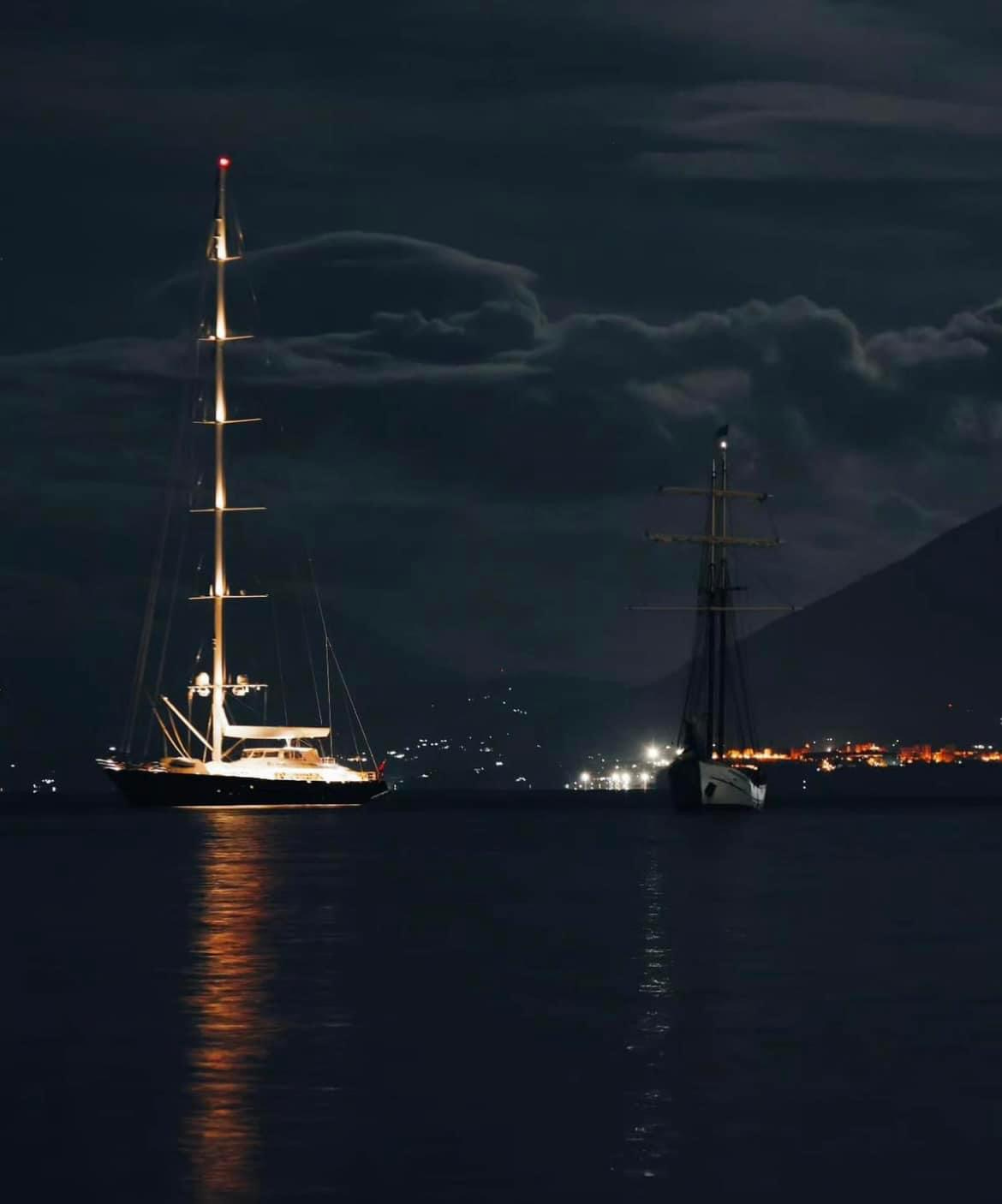
Around four o'clock in the morning, my mother was awake trying to calm down the dog. “Is a whirlwind”, she thought. It is not the first time, she knows it will pass. My aunt, in the house next door, opened her eyes wide. Indistinct screams came from the sea, “we must call for help”. In the turmoil of the moment, with the strong wind tricking the sounds, she saw something flying towards the sky. “Perhaps I imagined it?”. Drowsiness, moving lights, everything swirling in front of her window. Then, silence again. She looked at the horizon and only saw another boat that had also stopped there for the night. She confesses she told her guest: “il Perini, farsighted, left in time”. The Bayesian had already sunk, but she couldn’t know.
The morning after, helicopters were flying over their heads. My mother called in shock. There are missing people, I am not replying, we both know there is little chance they are still alive. In the next days, she updates me. Her voice is broken, she tells me that, there, they cannot think of anything else, that she has not been able to set foot in the water since. My sister and I are selfishly relieved not to be there, but I know we think the same thing: our friendly sea, where nothing bad can happen.
The press speaks of nothing else. Conspiracy flourishes. Opinions on social media never fail to discourage me. From those keen to stress the luck of Angela Bacares (for losing her daughter and husband, for having to carry the trauma for all eternity?) for inheriting billions (as much as I hate to have to specify, not that she needed it), to those disgusted by newspapers describing the hug between a survivor and ‘his woman’ and child: “how dare you employ such nineteenth-century terminology?!”. Much – and more reasonable – polemics emphasized how differently society perceives the death of migrants at sea. Truth. It got me thinking and the only answer I could think of relates to unpredictability of death. However ruthless, empathising with those who risk their lives out of desperation is less immediate, while a death on a holiday inevitably makes the privileged more vulnerable and fatalistic. And all this gives yet another idea of our level of habituation to (some) human misfortune, and this is beyond scary.
Yesterday I arrived in Sicily, and since then, I can’t help but staring at that red buoy. I felt the urge to write. I'm not sure why, I guess it has to do with the feeling of powerlessness. I was reminded of the proem to the second Book of Lucretius’ De Rerum Natura. I liked it a lot in high school because it was easy to learn. “Suave, mari magno turbantibus aequora ventis, /e terra magnum alterius spectare laborem”. Roughly: It is pleasant, when the winds disturb the expanses of the sea, to watch from land the great toil of another. Epicureanism or not, I have never disagreed more.
Great article, thanks for sharing!
Stupendo!